After Obsession
Aimee and Alan have unusual pasts and secrets they prefer to keep hidden. Aimee's deceased mother struggled with mental illness and hallucinations, and Aimee thinks it could be hereditary. After all, she sees a shadowy river man where there isn't one. And then there was that time she and her best friend Courtney tried to conjure a spirit with a Ouija board...
Alan is Courtney's cousin. His family moved to Maine when Courtney's father went missing. It's not just Alan's dark good looks that make him attractive. He is also totally in touch with a kind of spiritual mysticism from his Native American heritage. And it's not long before Aimee has broken up with her boyfriend
But it's not Aimee or Alan who is truly haunted - it's Courtney. In a desperate plea to find her father, Courtney invites a demonic presence into her life. Together, Aimee and Alan must exorcise the ghost, before it devours Courtney - and everything around her.
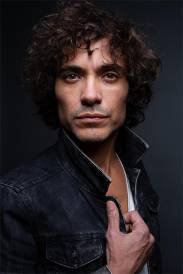
Steven Wedel is a high school English teacher and lives with his wife and children in Oklahoma, USA. He has written adult fantasy novels and this is his first book for young adults.
Carrie Jonesis an award-winning author, who recently graduated from Vermont College's MFA programme. She is the author of the YA novels Girl, Hero; Love (and Other Uses for Duct Tape) and Tips on Having a Gay (Ex)-Boyfriend, which was nominated for a YALSA Quick Pick and won the Maine Literary Award as well as the Independent Book Publisher Award (the IPPY) in the US.
Need and Captivate are the first two parts of her bestselling series.
After Obsession
Bloomsbury Publishing
ISBN: 9781408818275
Interview with Carrie Jones and Steven Wedel
Question: What research did you do into mental illness and hallucinations for After Obsession?
Carrie Jones: When I first thought of Aimee's character, she was much more focused on bipolar disorder and also on schizophrenia. I did a ton of research online and asking random doctor friends about causes, side effects, read books about bipolar disorder in artists and writers. And then I had to let it go a bit. The information was overwhelming me in a way that I think was actually mirroring Aimee being overwhelmed by her mom's illness. Throughout my life I've known a lot of people with varying degrees of mental illness, and it's a hard, emotional sort of topic for me.
Steven Wedel: I didn't research any mental illness, or hallucinations, really. I've read quite a bit about astral travel and the afterlife, though, and that was used for Alan's encounters with his totem animal.
Question: Can you talk about the experience of collaborating on After Obsession?
Carrie Jones: I had SOOOO much fun. We would each write a chapter and email it, one after another. The moment I wrote my chapter, I would start stalking my email's inbox, hoping for Steve's chapter to magically show up. Seriously. I would send out my chapter, and check my email five minutes later, going, "Um.... Dude.... Hurry up.... Come on...."
Every time Steve emailed a chapter to me it was a bit like getting a new love letter from the boy you liked in fourth grade. Pathetic. Yet true.
Hold on, I have to go hide in embarrassment.
It was a brilliant process in which the normally solo creative mind was expanded through the collaborative venture of joint story-telling.
Steven Wedel: It was so much fun I almost felt guilty getting paid for it. Almost! I had the exact same emotions Carrie's already described. It was an incredible experience. An amazing flow of creativity. We wrote the entire first draft in less than 30 days.
Yes, I believe it was Thomas Carlyle who said, "The lightning spark of thought generated in the solitary mind awakens its likeness in another mind." Carrie and I were both awake and generating lightning. Is that hoity-toity enough? Okay, seriously, as to the process, we had a general idea of where we were heading with the plot and we just wrote toward that goal. Most of the twists along the way were as big a surprise to the other writer as I hope they will be for the reader.
Question: Can you relate to the characters of Aimee and Alan in anyway?
Carrie Jones: Well, Aimee likes to paint. I like to paint. Aimee likes tall men. I like tall men. Aimee doesn't like to eat meat and she loves to kayak. Same here. We both love Nutella. On a deeper level, I can relate to worrying about how you might have inherited some essential difference from your mother, about how your reality fits into the world's bigger, prescribed reality, and how much of yourself you are really willing to risk to save your friends.
Steven Wedel: Well, yeah, to some degree. I was not athletic in school, have no American Indian blood, and was never, ever as smooth with the ladies as Alan is, but at the level where he often feels like an outsider, yes, I do identify with that. We do share musical tastes, a preference for old Ford trucks, and have long hair, though
Question: How much of your inspiration comes from real life and real people?
Carrie Jones: There is a kayak incident in the book. That happened on the river by my home. I looked for a boy's body and heard his last words. A lot of the places are set around Ellsworth, Maine in the US. So that really inspired a lot of the settings. There are some real cops in the story as well. I sort of have a thing for cops. I always try to insert my crush in a book. I know! I know! Pathetic.
Oh, there are a lot of characters in there who are co-workers or former students of mine. They're all at least thinly disguised, but I suspect they'll recognise themselves. The school in Oklahoma that Alan comes from is never named, other than their mascot of the Jets, but it is the school where I teach. Yes, there is quite a bit of real life in there.
Interview by Brooke Hunter