

Andrew Stanton Walle Interview
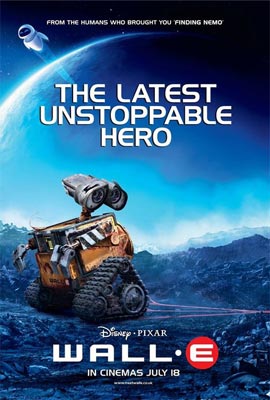
WALL.E Interview
WALL.E is the perfect family flick for these school holidays the movie takes audiences through the highs and lows of the solar-charged robot, WALL.E (Waste Allocation Load Lifter Earth-Class). WALL.E's job is to clean up the earth whilst all of human-kind lives on another planet, after all the other robots break down, WALL.E is the last left and he becomes very lonely. Until, EVE comes to earth and WALL.E falls in love. Love makes you do crazy things and WALL.E follows EVE to where mankind is living on the Axiom, in space.Andrew Stanton wrote and directed WALL.E to add to his extensive successful portfolio containing, Toy Story, Finding Nemo and Monster's Inc.
WALL.E is released in Australia in time for the school holidays on September 18th .How will WALL.E appeal to kids?
Andrew Stanton:Whenever I make these movies I make them for all ages, the thing is to not talk them down. I make them for what I would want to see, what I enjoy. I guess I am immature enough to do this and enjoy it too. I think this is a movie, and all of my others are universal for all ages. They are fun and adventurous and they take you through emotions.
Some parts of WALL.E are humorous are these directed at the kids only or at their parents also?
Andrew Stanton: Either. That is the wrong way to think about it, I made a movie I wanted to see and I thought others would want to see. It was funny to me and other, a bit like when we were making Toy Story years and years ago we had a taste of what we liked and created a movie.
How did you go about writing a story without a lot of dialogue?
Andrew Stanton: Honestly when I wrote it there was dialogue. I wrote it with the dialogue and as a director took it out and it was replaced with a beep or a quark or a buzz, in my mind when you hear these sounds I hear a line. Beneath those sound there is meaning and I would write what I thought he would be saying.
You have such a great ability of taking a normal object and giving them human qualities and personalities- how did you develop the character of WALL.E?
Andrew Stanton: I knew he would be lonely, that was my first idea all along. From there that made me think he would be shy if he was lonely, as he isn't around living things. That drew me to think of a turtle. WALL.E mimics this as, as a box he hides and a curl into a box like a turtle does to its shell. WALL.E is old like hundreds of years old, but still he is like a child as he has no experience with life, he is the oldest child in the world. One thing about children is they are curious and they don't know what to think or understand how things work. This is shown in WALL.E, he is curious about all the 'trash' the humans have left and he checks all of this out.
 Is the environmental message in the film for the kids?
Andrew Stanton: I know there are things in there that show that it could be a warning to what could happen to earth but honestly when I was writing it I wasn't thinking about that. I just wanted WALL.E to be lonely- so he had to be alone, the idea being he was the last robot on earth. I was just thinking about getting everybody else off the earth. The trash is there to signify the evidence that humanity was about and what they did. It is similar to if you leave a house and someone goes into it they can see or think about what you were like with the clues that are in your house.
How did you ensure you made audiences look beyond the exterior of WALL.E?
Andrew Stanton: A lot of it is how they act, we all have a fascination with animals and even with babies, and they are both the typical cute character. It is due to the way these characters express themselves. We are always saying "Oh that baby is hungry" or "Oh the baby likes me". It is the same with a dog we always say "The dog is lonely" or "I think the dog wants a walk". So I created WALL.E to be like these characters, he is cute and I made him act like this. We fall in love with him as a character because he is cute and innocent like with a pet or a baby, similar to these he can't exactly speak what is on his mind, so he does it without words.
All your movies have such an affect of kids and their parents, why do you think this is?
Andrew Stanton: I don't know... I am more trying to create and make the same movies that I experienced and love as a kid, movies like old classic Disney movies and Spielberg movies. I want to be transported for two hours and laugh, cry, be scared and at the end be thrilled about what happened. You need to capture these things in the movies, and I strive to do this, if I can stay pure to this goal the movies should continue.
 Starring: Fred Willard, Jeff Garlin, Ben Burtt, Sigourney Weaver, John Ratzenberger
Director: Andrew Stanton
Producer: Jim Morris
Screenwriter: Andrew Stanton
Producer: Jim Morris
Composer: Thomas Newman
Genre: Action/Adventure
What if mankind had to leave Earth, and somebody forgot to turn the last robot off?
Academy Award-winning writer-director Andrew Stanton ("Finding Nemo") and the inventive storytellers and technical geniuses at Pixar Animation Studios ("The Incredibles," "Cars," "Ratatouille") transport moviegoers to a galaxy not so very far away for a new computer-animated cosmic comedy about a determined robot named WALL-E.
After hundreds of lonely years of doing what he was built for, WALL-E (short for Waste Allocation Load Lifter Earth-Class) discovers a new purpose in life (besides collecting knick-knacks) when he meets a sleek search robot named EVE. EVE comes to realize that WALL-E has inadvertently stumbled upon the key to the planet's future, and races back to space to report her findings to the humans (who have been eagerly awaiting word that it is safe to return home). Meanwhile, WALL-E chases EVE across the galaxy and sets into motion one of the most exciting and imaginative comedy adventures ever brought to the big screen.
Joining WALL-E on his fantastic journey across a universe of never-before-imagined visions of the future, is a hilarious cast of characters including a pet cockroach, and a heroic team of malfunctioning misfit robots.


MORE
- Harry Potter Filmmakers Interview
- Bill Nighy Pirates of the Caribbean
- David Goyer The Invisible
- Story of Charlie & the Chocolate Factory
- Johnny Depp as Willy Wonka
- Johnny Depp Pirates of the Caribbean: Dead...
- Jason Biggs American Pie
- James Holzier
- James Franco
- Jack Nicholson Something's Gotta Give
- Ian McKellen
GIRL.COM.AU
CONTACT US
FOLLOW US ON

Copyright © 2001 - Girl.com.au, a Trillion.com Company - All rights reserved.