Should I Buy a Lab Grown Diamond Engagement Ring?
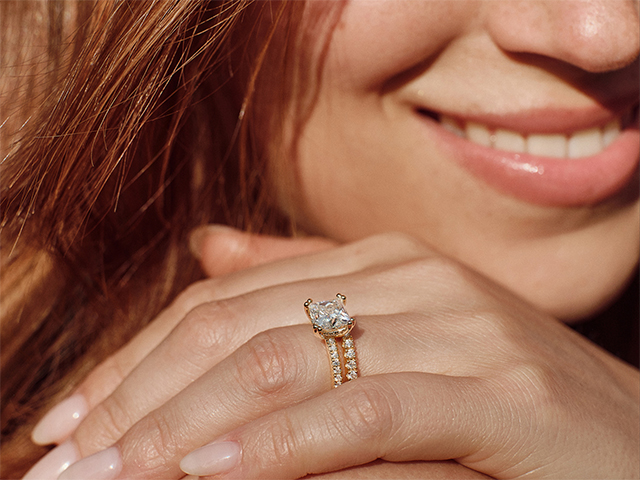
A lab grown diamond engagement ring is a beautiful option if you want the look, brilliance and durability of a diamond, often at a more accessible price than a comparable natural diamond.
For many modern couples, the question is no longer whether lab grown diamonds are "real" diamonds, but whether they are the right choice for their budget, values and personal style.
This guide explains what to know before buying, from price and certification to quality, settings and where to shop for lab grown diamonds Australia wide.
Are lab grown diamonds good for engagement rings?
Yes! Lab diamonds can be excellent for engagement rings. They are made from carbon and have essentially the same physical, chemical and optical properties as natural diamonds. That means they offer the same sparkle, hardness and everyday wearability expected from diamond jewellery.
The main difference is origin. Natural diamonds form underground over millions of years, while lab grown diamonds are created in controlled laboratory conditions using advanced technology.
Once cut and polished, a high-quality lab grown diamond can look identical to a natural diamond to the naked eye.
For an engagement ring, this makes them a practical choice. You can choose a larger stone, higher colour grade or more detailed setting without necessarily increasing your budget in the same way you would with a natural diamond.
Are lab grown diamonds cheaper?
Yes, lab grown diamonds are cheaper than natural diamonds of similar size and quality. The exact difference varies depending on carat, cut, colour, clarity, shape and market conditions, but lab grown stones are generally much more accessible.
When comparing lab grown vs natural diamond prices, the biggest advantage is choice. A couple may be able to afford a larger centre stone, a higher clarity grade or a more elaborate ring design when choosing lab grown.
Approximately, a lab grown diamond is usually about 4 to 8 times cheaper than a comparable natural diamond at 1 carat, and often 5 to 15 times cheaper as the carat size increases.
In percentage terms, that means they are often around 75% to 90% cheaper than natural diamonds.
This does not mean you should only look for the cheapest available option. A low price can still come with trade-offs in cut quality, proportions or certification.
The best value is not always the lowest cost, but the stone that offers the right balance of beauty, grading and long-term satisfaction.
How much is a lab grown diamond engagement ring?
The cost of a lab grown diamond engagement ring depends on the diamond and the setting. The centre stone usually has the biggest impact, followed by the metal, ring design, side stones and craftsmanship.
A simple solitaire setting will usually be more accessible than a hidden halo, pavé band or custom-designed ring. Platinum and 18ct gold can also affect the final price, while larger carat weights and higher grades will increase the cost.
If you are comparing diamond engagement rings, it helps to look at the full ring rather than the diamond alone. A beautifully cut lab grown diamond in a well-made setting will often look more impressive than a larger stone with poor proportions.
What should you look for in a lab grown diamond engagement ring?
When choosing a lab grown diamond, focus on the 4Cs, the same quality factors used for natural diamonds: cut, colour, clarity and carat.
Cut is especially important because it affects how much the diamond sparkles. A well-cut diamond reflects light beautifully, while a poorly cut stone can look dull even if it has strong colour or clarity grades.
Colour refers to how colourless the diamond appears. Many buyers prefer near-colourless grades because they offer a bright look without necessarily paying for the highest possible grade.
Clarity measures the tiny natural imperfections in a diamond – inclusions inside the stone and blemishes on its surface. With lab grown diamonds, many inclusions are difficult to see without magnification, so the goal is usually to choose a stone that looks clean to the eye.
Carat affects size, but shape matters too. Oval, pear, marquise and emerald cuts can create very different looks, even at the same carat weight.
You can explore GS Diamonds' lab grown diamond engagement rings to compare different cuts, settings and prices.
Do lab grown diamonds come with certificates?
Quality lab grown diamonds should come with independent certification. At GS Diamonds, lab grown diamonds are certified by IGI, helping buyers understand important details such as diamond origin, cut, colour, clarity and carat weight.
Certification matters because it gives you transparency. It confirms that the stone is lab grown and provides grading details that help you compare options more confidently.
For natural diamonds, GIA certification is often considered the standard. For lab grown diamonds, IGI certification is widely used and recognised, especially for stones sold in jewellery and engagement rings.
Where do I get lab grown diamond engagement rings?
If you are looking for engagement rings in Australia, GS Diamonds offers both natural and lab grown options online and in-store. You can browse ready-to-wear designs, choose a diamond and setting, or create something more personal with expert guidance.
You can visit any of our showrooms to view designs in person, compare stones and speak with a specialist before making a decision.
You can also explore the full engagement rings collection to compare natural and lab grown diamond styles side by side.
Lab grown or natural: which should you choose?
A lab grown diamond is a strong choice if you want maximum visual impact, a larger stone or a higher-quality look within your budget. It is also a good option if you like the idea of a diamond created through modern technology, or if knowing exactly where your stone comes from matters to you, since every GS Diamonds lab grown diamond's origin is confirmed on its IGI certificate.
A natural diamond may be the better choice if rarity, geological origin or long-term resale considerations matter more to you.
Bottom line, there is no universally right answer. Both are forever. Both are "real" diamonds. The best engagement ring is the one that matches your values, budget and the way your partner will love to wear it.
MORE
GIRL.COM.AU
CONTACT US
FOLLOW US ON