Buying Your First Car: What to Look For and What to Ignore
Buying your first car is an exciting milestone in everyone's life. However, amidst the excitement of being able to drive anywhere you want, whenever you want, it is easy to lose focus.
Granted, a polished dashboard, shiny paint or upgraded speakers may catch your attention. Yet none of these things tells you whether a car is safe, reliable or affordable to own.
Instead, by looking at the car's condition, history, safety and running costs, you can narrow down your choices without getting swept up by features that add little practical value. Let's explore what you should look for and what you should ignore when buying your first car. Hopefully, it will be helpful in your search. The first thing you should be aware of is that your budget needs to cover more than just the advertised price. The likes of registration, stamp duty, insurance and transfer fees can all add a sizeable amount before you even drive home. Then, of course, there are ongoing costs to consider, such as: It is important to ask insurers for detailed quotes before choosing a model. That's because you might find a cheap car is surprisingly expensive to insure, particularly if you happen to be a younger or newly licensed driver. At the same time, it is also worth keeping some money aside after the purchase. If you spend every dollar you have on the car, it will leave nothing for a flat battery, worn tyres or an overdue service. Some buyers save up their money until they can purchase a car outright. Others use the bank of mum and dad. And then there are those who rely on a car loan, personal loan or a mixture of savings and borrowed money. If you need the car quickly for work, study or family commitments, it may be worth researching personal financing options with fast approval. That said, approval speed should not be the only consideration. You should also take into account the interest rate, application fees, late-payment charges, repayment amount and total sum repayable. Additionally, check whether you will still be comfortable making repayments after rent, food, bills, and other regular expenses have been covered. Overall, a cheaper car with manageable repayments is usually a better first purchase than a newer model that strains your weekly budget. Buying a new car gives you access to the latest features and a full manufacturer's warranty, with the bonus of no history of wear or poor treatment. However, it usually costs more than older cars and may quickly lose its value during its early years. A used car, on the other hand, can give you more choice within a limited budget. If you are lucky, you might be able to buy a reliable model with good safety equipment for much less than its original price. The trade-off, though, is that its condition typically depends on how previous owners drove and serviced it. You should not assume that newer automatically means better. Indeed, a well-kept used car with complete service records can be a sounder purchase than a neglected car that is only a few years old. Some people are put off purchasing from a dealership as they feel their cars often cost more. However, buying from a licensed dealer generally comes with greater consumer protection in the form of warranty rules. However, these do vary between states and territories. So, it's worth checking the laws where you live. By contrast, private sales are often cheaper and may leave more room for negotiation. But with them, the onus is on you to carry out your own checks, arrange an inspection and confirm that the person selling the vehicle has the right to do so. Whichever make or model you choose, it is advisable not to pay a deposit until you have seen the car, checked its paperwork and confirmed the seller's identity. If you are interested in buying a second-hand car, a good place to start is with the service book and receipts. A history of regular servicing suggests that the owner has looked after the vehicle well. But long gaps between them warrant questions. Ideally, you should walk around the car in daylight. When doing this, look for signs of uneven paint, dents, rust, mismatched panels and inconsistent gaps around the doors or bonnet. All of which may point to previous accident repairs. You should always check that the tyres have enough tread and appear evenly worn. Inside the car, be sure to test the windows, air conditioning, lights, indicators, seatbelts and dashboard controls. Also, turn on the ignition, confirm that warning lights illuminate, and then switch off normally. It is a good idea to arrange for an independent inspection if you are serious about buying a used car, especially privately. You will have to pay to do this, but it could be an incredibly useful exercise because a pre-purchase inspection may reveal oil leaks, worn suspension, poor repairs or mechanical problems that are otherwise difficult to spot during a quick viewing. You are recommended to choose a qualified mechanic or vehicle inspection service that has no connection to the seller. If the seller refuses to allow an inspection, treat that as a red flag and don't be afraid to walk away. When doing a test drive, try to test out as many different types of roads as possible. This might include suburban streets, a higher-speed section, possibly even a highway, and a few roundabouts and corners. It is worth paying particular attention to: * How easily the engine starts Lastly, make sure you check whether the driving position feels comfortable. If you don't, you might regularly have to deal with poor visibility or an awkward seat for as long as you keep the vehicle you now own.How Much Can You Really Afford to Spend?
* Fuel or charging
* Regular servicing
* Tyres and replacement parts
* Registration renewal
* Insurance premiums
* Unexpected repairs
* Loan repayments, where applicable
How Will You Pay for Your First Car?
Should You Buy a New or Used Car?
Is It Better to Buy From a Dealer or a Private Seller?
What Should You Check Before Buying a Used Car?
Should You Arrange an Independent Inspection?
What Should You Look for During a Test Drive?
* Whether acceleration is smooth
* How the steering feels
* Whether the car brakes in a straight line
* Any vibration through the wheel or pedals
* Clunks, rattles, squeals or grinding sounds
* Visibility when turning, parking and changing lanes
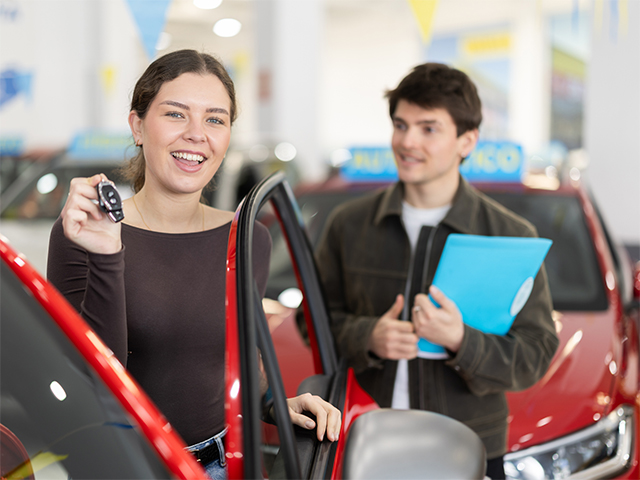
image credit istock JackF


MORE
GIRL.COM.AU
CONTACT US
FOLLOW US ON