COVID lockdown became Stephanie's turning point. Stephanie, a lifelong performer has appeared in productions including The Paul Hogan Story, Mako Mermaids, and the award-winning short film Tranquillity Acres, which received multiple accolades at the LA Film Festival. Inspired by the fantasy stories by Sarah J Maas, which carried her through isolation during lockdown, she picked up a pen and wrote a romantasy novel she never believed she could.
That leap of faith led to several international publishers and the creation of her own production company 'Semper Productions', (Semper is the Latin word for 'forever') where she writes, produces, directs, and stars in her own projects, including her medieval inspired mini-series, Keys to the Keep.
You're an actor by trade… have you always wanted to write?
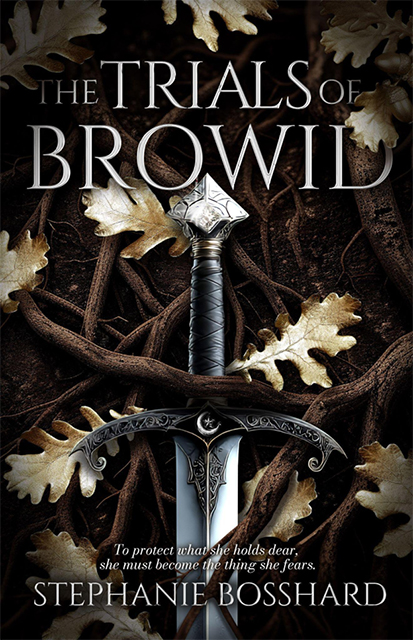
I actually started writing when I was 16, working on another romantic fantasy novel"one that never made it past my best friend's eyes. But the real spark for writing didn't come until I began working on The Trials of Browid, and later my mini-series Keys to the Keep.
For a long time, I pigeonholed myself into believing I should only focus on acting. But once I began writing The Trials of Browid, it opened up parts of my imagination I hadn't explored before. Writing stopped being a side passion and became something just as creative, fulfilling, and essential to me as acting.
You wrote this book during the covid lockdown in Melbourne, when you were separated from your family in Queensland and your acting jobs were on hold. How tough was that period for you?
It was an incredibly difficult time"just as it was for so many people. Being isolated from my family in Queensland was already heartbreaking, and having all my acting work suddenly disappear made everything feel even heavier. I remember thinking, "This has to end soon, because if it doesn't, I'm losing years of acting work and precious time with my family."
But honestly, writing saved me. Instead of spiralling into "poor me," I realised we were all struggling, all longing to see our families again. So I threw myself into the stories forming in my mind. The Trials of Browid became my escape. I learned from my own characters"how they endure pain, how they push through suffering, how they hold onto hope even when it feels like a never-ending night. Writing gave me purpose and light in a very dark time.
Your book opens with intense moments of power and identity. What first sparked the idea for The Trials of Browid?
Selena Bell arrived in my mind at a time when I felt completely untethered. I was isolated, cut off from everything familiar, and I kept circling the question of identity"who we are when everything we rely on falls away. Out of that feeling, Selena took shape: a girl who truly believes she's ordinary, who doubts her worth, who doesn't see the power simmering under her skin.
She was the first thread of The Trials of Browid. Once I understood her"her uncertainty, her quiet strength, her hidden potential"the rest of the world built itself around her. The story grew from that single spark into something far more expansive and magical than I ever intended, and she became the anchor for all of it.
You say you've always been attracted to fantasy " including television programs and films like The Hobbit, Lord of the Rings, and The Witcher. What attracts you to this genre?
I've always loved fantasy because it offers something we don't get in our everyday lives. The real world can feel so structured, so predictable " but when I step into worlds like The Witcher or The Hobbit, everything expands. Suddenly there's danger, magic, adventure, and a sense of possibility that doesn't exist in the ordinary.
I think we all crave that in some way. Fantasy lets us explore the "what ifs" " new rules, new hierarchies, new kinds of people with extraordinary abilities. There's something deeply special about creating a world where magic is real and identity can be reshaped. I suppose I'm drawn to that idea of holding onto something unique, something powerful, something that makes us feel more than ordinary.
How challenging is acting, directing, and producing your own work? What are the biggest hurdles?
Keys to the Keep was the first mini-series I ever wrote, directed, produced, and acted in " and I truly had no idea what I was stepping into. Thankfully, I worked with an incredible team who made the learning curve so much easier.
One of the biggest challenges was organisation: coordinating cast and crew, locking in shoot dates, and keeping everything running smoothly. It was also surprisingly difficult to jump between being Ivory in front of the camera and then instantly switching into director mode to get the shots I wanted. Staying present in my performance while also managing the production's needs was a huge balancing act.
But the biggest hurdle was time management. On set, everything moves fast, and hitting deadlines while problem-solving in real time was intense. Still, it was invaluable. Being behind the camera taught me so much " especially how crucial lighting and sound are for creating something that looks truly professional.
Keys to the Keep also pushed me physically. I had to train for combat scenes, which honestly intimidated me at first, but with the help of my team we choreographed a fight sequence I'm incredibly proud of (coming in Part 7!).
Despite the hurdles " including Melbourne's unpredictable weather " it was one of the most rewarding experiences of my career. I loved meeting other creatives, learning new skills, and proving to myself that I can run my own production from start to finish.


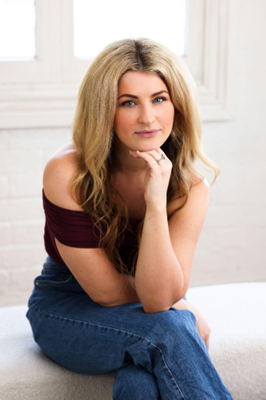 Interview with Stephanie Bosshard