Why Eye Health Is Easier to Manage Than Ever
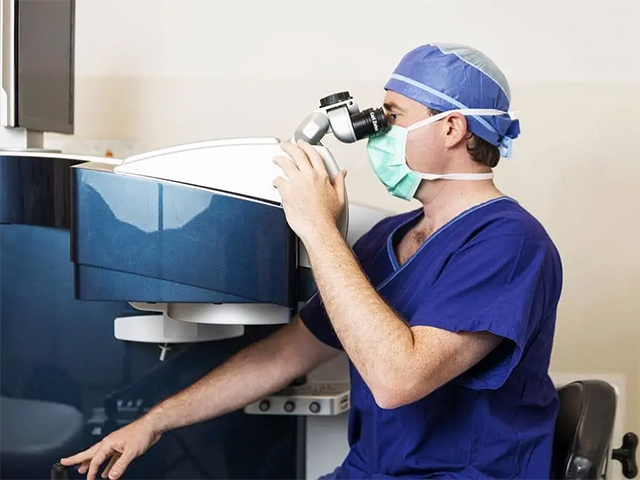
Between work, family commitments, your social life, fitness goals, and trying to squeeze in a little self-care, most women have plenty on their plates. It's not surprising, then, that when life gets busy, some things often slip down the priority list, including our eye health.
It's easy to assume your eyesight is fine if you are not experiencing any obvious symptoms that might declare otherwise. However, as over 14 million Aussies live with long-term eye conditions like Long-sightedness (Hyperopia), Short-sightedness (Myopia), Astigmatism, Cataracts, and Macular Degeneration, your eye health is something you should pay closer attention to.
Unfortunately, not everyone does this. A recent study found that 1 in 4 Aussies hasn't had an eye test within the recommended timeframe of once every 2 years. But given that most of us spend hours looking at our phones and laptops, being exposed to the harsh Australian sun, or just enduring the natural ageing process, it really is important to do so.
Thankfully, managing your eye health is easier today than ever, largely thanks to advanced diagnostic technology and improved treatment options. Let's take a look at how doing this can benefit you.
What Are the Most Common Eye Problems Affecting Women in Australia?
It might surprise you to learn that women are actually more likely than men to experience several long-term eye conditions throughout their lives. Indeed, studies have shown that approximately 59% of Australian women are living with a long-term vision disorder, compared to 51 per cent of men.
One of the main reasons why is that women live four years longer on average than men, so they are more susceptible to developing age-related eye diseases. However, others include hormonal changes associated with pregnancy, perimenopause, and menopause. All of which can affect your eye health, particularly tear production and eye comfort. In addition, certain autoimmune conditions that are more common in women, such as Multiple Sclerosis (MS), Sjögren's Disease, Graves' Disease, Systemic Lupus Erythematosus (Lupus), and Rheumatoid Arthritis, can contribute to vision-related problems.
As a result, many women will experience some form of eye condition during their lifetime. The most common of which include:
1. Dry Eye Disease
It is estimated that more than 3 million women in Australia suffer from dry eye disease. A condition that often manifests as burning, redness, grittiness, excessive watering, or periods of blurred vision.
For many women, hormonal fluctuations and the onset of menopause can reduce their tear production and alter their tear quality. Spending long hours looking at screens can often worsen the symptoms.
Thankfully, the condition can be managed with lubricating eye drops, prescription medications, lifestyle adjustments, and specialised in-clinic therapies.
2. Age-Related Macular Degeneration (AMD)
Unfortunately, age-related macular degeneration is one of the leading causes of severe vision loss among older Australians, and women are particularly vulnerable to it later in life.
This condition damages the macula, which is the part of the eye that is responsible for sharp central vision. As the disease progresses, everyday activities such as reading, recognising faces, driving, or applying makeup can become increasingly difficult.
It is important to have regular eye examinations to monitor AMD symptoms because the earlier you detect them, the more successful treatment might be in countering them.
3. Cataracts
Approximately 4.4% of women in Australia are believed to have cataracts. However, as this affliction is heavily age-related, around 18.5% of women over the age of 80 have it.
Cataracts occur when the eye's natural lens gradually becomes cloudy over time. This can lead to blurry vision, faded colours, increased glare sensitivity, and difficulty seeing at night.
Thankfully, cataract surgery is one of the most successful and widely performed procedures in the country. Often, it can bring you a much clearer vision and improve your overall quality of life.
4. Pterygium
Living in Australia, the country's sunny climate can make you more prone to a condition known as pterygium. Sometimes called "surfer's eye", it is often a direct consequence of long-term exposure to ultraviolet radiation, wind, and dust.
Women who enjoy outdoor exercise, beach activities, gardening, or spending time in the sun may be at greater risk of contracting it than others. If they do, symptoms usually manifest as redness, irritation, dryness, and a visible growth on the white of the eye. In some cases, the condition can begin to affect your vision and may require specialist treatment, such as pterygium surgery in Brisbane.
5. Glaucoma
Glaucoma is often gallingly referred to as the "silent thief of sight". That's because it can develop without noticeable symptoms in its early stages.
The disease damages the optic nerve and can lead to permanent vision loss if it goes undetected. In fact, approximately half of all glaucoma cases are believed to remain undiagnosed, mainly because many people are simply unaware that they have the condition.
Depending on the severity of the condition, treatment may involve medicated eye drops, laser procedures, or surgery.
6. Refractive Errors
Refractive errors include short-sightedness, long-sightedness, astigmatism, and presbyopia. All of which commonly develop with age.
Many women first notice presbyopia in their 40s and 50s, when they find that reading menus, books, or text messages becomes more difficult. Fortunately, these conditions can usually be corrected with glasses and contact lenses. Or, in more extreme cases, laser vision correction procedures.
What Can You Do at Home to Keep Your Eyes Healthy?
As women are more prone to certain eye conditions than men, it is in all of our interests to look after our sight.
The best way to do this is to book a regular eye appointment with a qualified optometrist at least once every two years. They will give you routine tests to establish a baseline of your current eye condition and then monitor it for potential declines moving forward.
Between appointments, other things you can do include always wearing quality sunglasses outdoors, as this will protect your eyes from harmful UV exposure. You should always take regular breaks from screens to reduce your potential for eye strain. Ideally, by following the 20-20-20 rule, which involves looking at something 20 feet away for 20 seconds every 20 minutes.
Additionally, try to get good sleep (ashwagandha can help!), exercise regularly, and eat a balanced diet rich in vitamins A, C, and E, as well as omega-3 fatty acids.
MORE
GIRL.COM.AU
CONTACT US
FOLLOW US ON