

Urgent Plea for Device Donations to Schools Grows Louder as Youth Digital Access Gap Widens
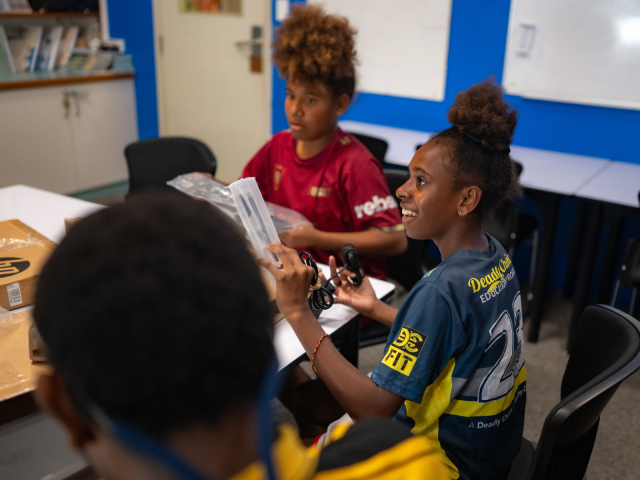
With the latest data revealing 1.42 million young people in Australia cannot access a computer at home, not-for-profit WorkVentures is urging Australian businesses to donate their unused devices to help put an end to digital poverty and close Australia's digital divide.
This includes 523,000 young Australians without computer access aged 14 and above, for whom device access is essential for learning and daily tasks.
In fact, even including access in other places such as schools and libraries, 14% of all young people aged 8 to 25 (864,000) have no access to a learning device, up from 10% last year.
As AI continues to penetrate all corners of the digital world, young people who lack the resources to access technology are at increased risk of getting left behind.
One third of young people without a learning device say they do not use AI, more than twice the rate of those with access to a learning device (14%). Those with a learning device also demonstrate better fact-checking habits around the use of AI, highlighting the barrier lack of access creates between young people and educational opportunities.
Despite the concerning access gap, four in five Australians agree that digital skills are essential for future careers, an increase on 12 months ago.
As students return to the classroom, WorkVentures is urging Australian businesses and government to help close the digital divide by donating their unused devices to the National Device Bank - a collaboration with Good Things Australia - for refurbishment and re-use. The National Device Bank already has thousands of devices committed since launching late last year. However, demand for devices far exceeds committed donations, with a goal in place to secure pledges for one million devices by 2030.
Alongside refurbished devices, the National Device Bank connects people to digital skills support, helping build essential skills for meaningful and lasting digital inclusion.
WorkVentures CEO Caroline McDaid says, "This week, students across Australia return to the classroom, yet a lack of access to devices that are crucial for learning means 1.42 million young people are at risk of getting left behind.
"With AI's growing influence and an increasing emphasis on digital skills in the workplace, Australian businesses can play a stronger role in supporting the next generation with obtaining vital digital skills. Access to a device such as a tablet or laptop is often taken for granted, but it represents a fair shot at a good education, career and life.
"If Australian businesses and government divert even just a portion of their still valuable devices to the National Device Bank, we can help close the digital divide and ensure Australia's economy thrives by repurposing devices and making them accessible to those within our communities currently excluded from the digital world."
Westpac has donated its used technology for reuse by digitally excluded young people for many years – supporting the distribution of over 50,000 repurposed devices to Australians who would otherwise have gone without.
The Smith Family CEO Doug Taylor says Westpac's donations make a huge difference for young Australians, like those supported through their Learning for Life program.
"Every young person should have access to the devices necessary to fully participate in their education," Doug says.
"Families we work with are telling us they're concerned about affording the digital devices that are now crucial for a child to succeed at school.
"Currently 44% of students on our Learning for Life program do not have a digitally connected laptop at home.
"Working with organisations like WorkVentures and Westpac means we can continue our mission of ensuring all young people in Australia are digitally connected and no one will miss out on their education simply due to circumstance."
Westpac Head of Workplace Technology, Paul McKenna urged other organisations to consider ways to support the National Device Bank.
"A device seemingly at the end of its life for us, has so much more potential and can prove extremely valuable to someone else.
"Laptops, tablets and mobile phones can be given a new lease of life, preventing unnecessary waste while making sure young Australians are on an even playing field when it comes to educational opportunities that will take them through the rest of their lives," McKenna says.
Caroline concludes, "Australia's digital access gap means businesses and government must step up and invest in its future workforce – our young people. By donating, businesses are ensuring thousands of disadvantaged students benefit from the National Device Bank and receive access to refurbished devices that will empower them at school as they build up the skills they'll need for their future life and careers."
With students back in class after the summer break, WorkVentures and Good Things Australia are encouraging Australian companies and government agencies to donate their devices to the National Device Bank so they can be refurbished and redistributed for free to people who are digitally excluded. To learn more about how you can support the Australian National Device Bank, visit nationaldevicebank.org.au.
This includes 523,000 young Australians without computer access aged 14 and above, for whom device access is essential for learning and daily tasks.
In fact, even including access in other places such as schools and libraries, 14% of all young people aged 8 to 25 (864,000) have no access to a learning device, up from 10% last year.
As AI continues to penetrate all corners of the digital world, young people who lack the resources to access technology are at increased risk of getting left behind.
One third of young people without a learning device say they do not use AI, more than twice the rate of those with access to a learning device (14%). Those with a learning device also demonstrate better fact-checking habits around the use of AI, highlighting the barrier lack of access creates between young people and educational opportunities.
Despite the concerning access gap, four in five Australians agree that digital skills are essential for future careers, an increase on 12 months ago.
As students return to the classroom, WorkVentures is urging Australian businesses and government to help close the digital divide by donating their unused devices to the National Device Bank - a collaboration with Good Things Australia - for refurbishment and re-use. The National Device Bank already has thousands of devices committed since launching late last year. However, demand for devices far exceeds committed donations, with a goal in place to secure pledges for one million devices by 2030.
Alongside refurbished devices, the National Device Bank connects people to digital skills support, helping build essential skills for meaningful and lasting digital inclusion.
WorkVentures CEO Caroline McDaid says, "This week, students across Australia return to the classroom, yet a lack of access to devices that are crucial for learning means 1.42 million young people are at risk of getting left behind.
"With AI's growing influence and an increasing emphasis on digital skills in the workplace, Australian businesses can play a stronger role in supporting the next generation with obtaining vital digital skills. Access to a device such as a tablet or laptop is often taken for granted, but it represents a fair shot at a good education, career and life.
"If Australian businesses and government divert even just a portion of their still valuable devices to the National Device Bank, we can help close the digital divide and ensure Australia's economy thrives by repurposing devices and making them accessible to those within our communities currently excluded from the digital world."
Westpac has donated its used technology for reuse by digitally excluded young people for many years – supporting the distribution of over 50,000 repurposed devices to Australians who would otherwise have gone without.
The Smith Family CEO Doug Taylor says Westpac's donations make a huge difference for young Australians, like those supported through their Learning for Life program.
"Every young person should have access to the devices necessary to fully participate in their education," Doug says.
"Families we work with are telling us they're concerned about affording the digital devices that are now crucial for a child to succeed at school.
"Currently 44% of students on our Learning for Life program do not have a digitally connected laptop at home.
"Working with organisations like WorkVentures and Westpac means we can continue our mission of ensuring all young people in Australia are digitally connected and no one will miss out on their education simply due to circumstance."
Westpac Head of Workplace Technology, Paul McKenna urged other organisations to consider ways to support the National Device Bank.
"A device seemingly at the end of its life for us, has so much more potential and can prove extremely valuable to someone else.
"Laptops, tablets and mobile phones can be given a new lease of life, preventing unnecessary waste while making sure young Australians are on an even playing field when it comes to educational opportunities that will take them through the rest of their lives," McKenna says.
Caroline concludes, "Australia's digital access gap means businesses and government must step up and invest in its future workforce – our young people. By donating, businesses are ensuring thousands of disadvantaged students benefit from the National Device Bank and receive access to refurbished devices that will empower them at school as they build up the skills they'll need for their future life and careers."
With students back in class after the summer break, WorkVentures and Good Things Australia are encouraging Australian companies and government agencies to donate their devices to the National Device Bank so they can be refurbished and redistributed for free to people who are digitally excluded. To learn more about how you can support the Australian National Device Bank, visit nationaldevicebank.org.au.



MORE
- The Choir of Man Brisbane
- Cirque Nouvelle Circus
- Cenovis Nutriplan
- Celebrate Australia Day at the Races
- Cat Power May Tour
- CarAdvice Launches Dream Job for 2015
- DJ Heartstring Headline Show
- Ben Salter The Stars My Destination Tour
- Luke Severeid AU NZ Tour
- Barangaroo Reserve Blak Markets
- Barangaroo Welcome Celebration - October
GIRL.COM.AU
CONTACT US
FOLLOW US ON

Copyright © 2001 - Girl.com.au, a Trillion.com Company - All rights reserved.